
Active vs Traditional Summer Camps: Which Is Better for Your Child?
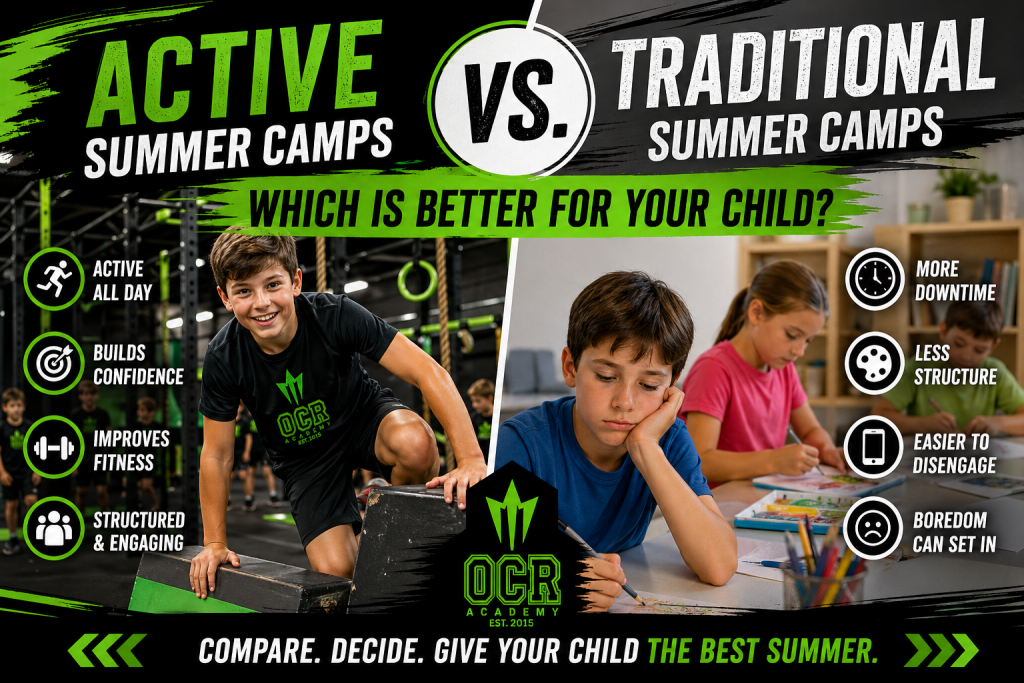
If you’re comparing summer camps for your child, you’ve likely come across two very different types of programs:
- Traditional camps (crafts, mixed activities, unstructured play)
- Active camps (movement-focused, structured, high-energy programs)
At first glance, both seem like good options.
But depending on your child—especially between ages 7–13—the difference can be significant.
What Is a Traditional Summer Camp?
Traditional camps usually offer a mix of:
- arts and crafts
- games
- outdoor time
- occasional sports
These programs tend to be:
- flexible
- loosely structured
- focused on variety rather than progression
For some children—particularly younger or lower-energy kids—this can be a good fit.
What Is an Active Summer Camp?
Active camps are built around movement, structure, and engagement.
They typically include:
- physical challenges
- skill-based activities
- coach-led sessions
- structured schedules
The focus is not just on keeping kids busy—but on keeping them actively engaged throughout the day.
The Key Difference: Engagement vs. Passivity
Traditional Camps:
- periods of downtime
- less consistent activity
- easier for kids to disengage
Active Camps:
- continuous participation
- minimal idle time
- higher energy output
For many kids—especially those with high energy—this difference determines whether they:
👉 love camp
👉 or lose interest halfway through the week
Why This Matters More for Ages 7–13
By ages 7–13, many children:
- need more challenge
- get bored more easily
- respond better to structure
This is why parents often search for:
- summer camps for older kids
- camps for active kids
- high energy summer camps near me
Physical Activity Drives Better Outcomes
According to the Public Health Agency of Canada, physical activity supports:
- physical health
- emotional well-being
- cognitive development
Active camps naturally provide this environment.
Sleep, Focus, and Behavior
Active camps often lead to:
- better sleep
- improved mood
- stronger focus
- fewer behavioral issues
Physical activity helps regulate energy levels and daily rhythms, which directly impacts how kids function at home.
Structure vs. Flexibility
Traditional camps emphasize flexibility.
Active camps emphasize structure.
Structure helps children:
- stay engaged
- build confidence
- reduce boredom
Which Type of Camp Is Right for Your Child?
Traditional camps may be a good fit if your child:
- prefers slower-paced activities
- enjoys crafts and creative time
- doesn’t need constant movement
Active camps are often a better fit if your child:
- has high energy
- enjoys physical challenges
- gets bored easily
- benefits from structure
- likes progression and skill-building
The Reality Most Parents Discover
Many parents try traditional camps first.
For some kids, they work.
But for others, the experience can feel:
- repetitive
- unchallenging
- not engaging enough
That’s often when parents start looking for something more structured and active.
Finding the Right Fit in Ottawa
Explore options here:
👉 OCR ACADEMY
CONSIDERATIONS BY LOCATION:
How to Know You’ve Chosen the Right Camp
When the fit is right:
- kids stay engaged
- they come home tired (in a good way)
- they want to go back
🔍 FAQ
What is the difference between active and traditional summer camps?
Active camps focus on structured movement and engagement, while traditional camps offer a mix of activities with more flexibility and downtime.
Are active summer camps better for older kids?
Yes. Kids ages 7–13 often benefit more from structured, high-energy environments that keep them engaged.
Do active summer camps help with behavior and focus?
Yes. Increased physical activity is linked to better focus, mood, and overall behavior.
Are traditional summer camps still a good option?
They can be, especially for younger children or those who prefer slower-paced activities.
How do I choose the right summer camp for my child?
Consider your child’s energy level, need for structure, and ability to stay engaged throughout the day.