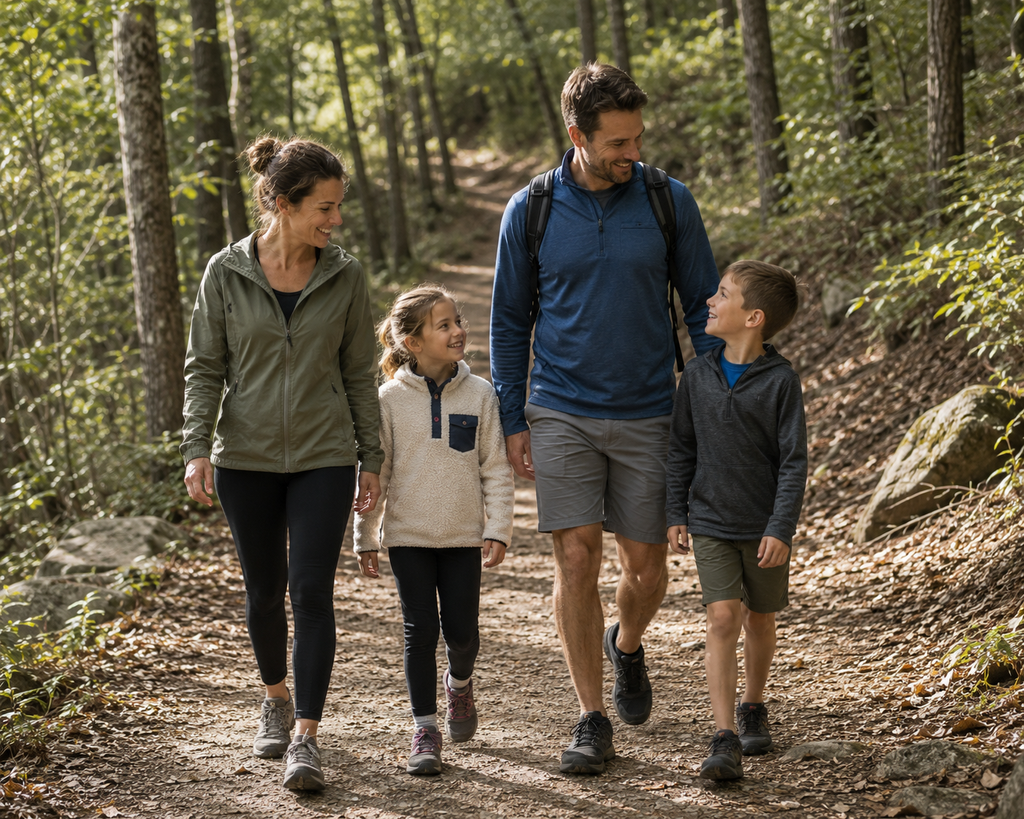
What Is Forest Bathing (Shinrin-yoku)?
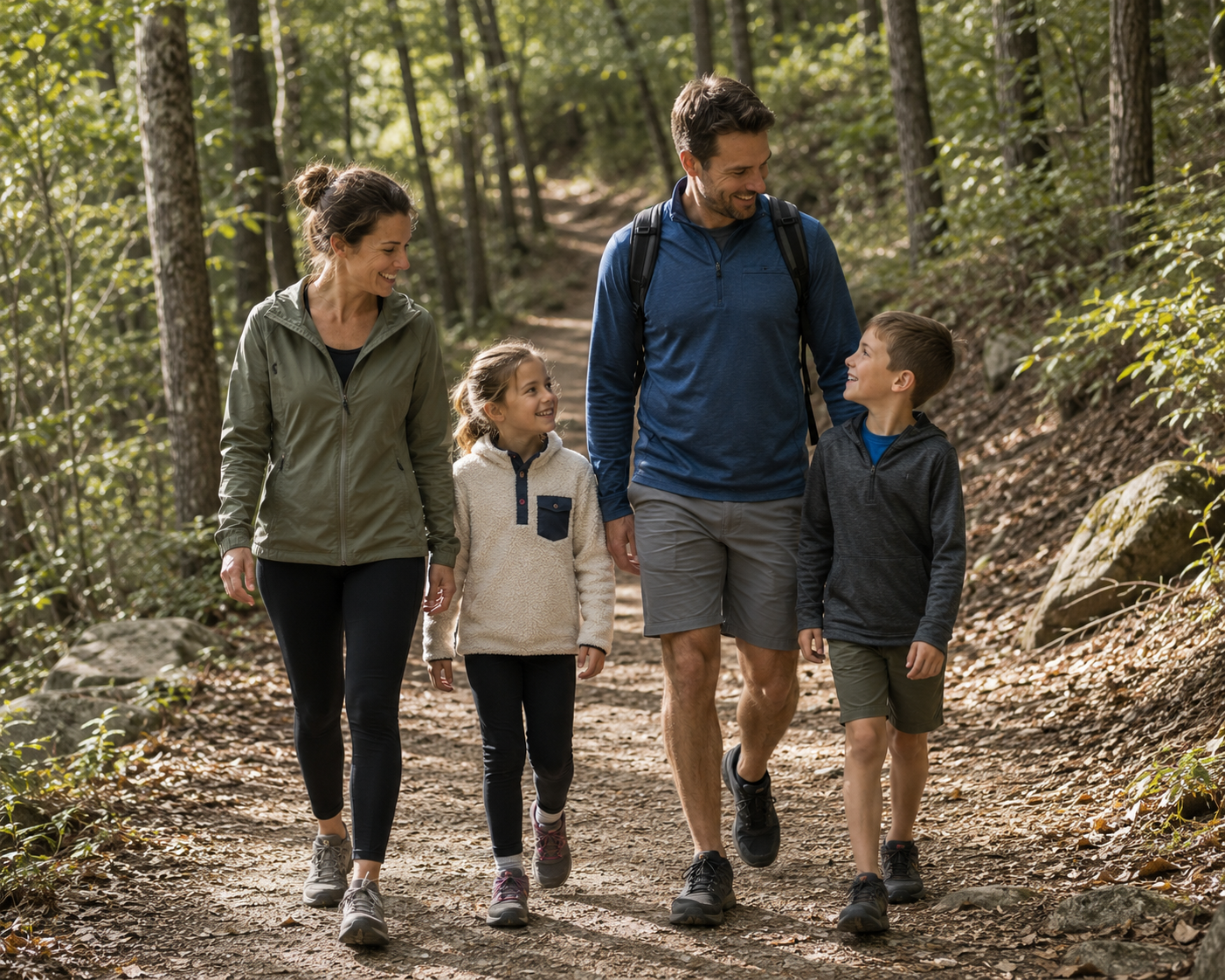
In the early 1980s, Japan faced a growing issue: rising burnout, chronic stress, and overwork.
Researchers began exploring whether something simple—time spent in nature—could help regulate the human stress response.
The result was Shinrin-yoku, or forest bathing.
This isn’t about hiking or training. It’s about immersion—walking slowly through a natural environment and allowing your senses to fully engage with it.
No performance metrics. No intensity targets.
Just exposure.
And once researchers started measuring its effects, the implications for fitness, recovery, and performance became clear.
1. Forest Bathing Reduces Cortisol and Improves Recovery
One of the most immediate effects of nature exposure is a reduction in cortisol, the body’s primary stress hormone.
Studies comparing urban walking to forest environments consistently show measurable physiological changes.
Participants walking in forest environments experienced:
- 12–16% lower cortisol levels
- Reduced heart rate
- Lower blood pressure
This shift represents more than relaxation—it’s a transition in nervous system state.
From:
- Sympathetic (fight-or-flight)
To:
- Parasympathetic (rest-and-repair)
For anyone training regularly, this directly impacts recovery speed, sleep quality, and adaptation to training.
Research reference:
https://pmc.ncbi.nlm.nih.gov/articles/PMC11049180/
2. Nature Exposure Supports Immune Function
Training places stress on the body. Recovery determines whether that stress leads to adaptation or breakdown.
Forest environments introduce an interesting variable: phytoncides.
These are airborne compounds released by trees as part of their natural defense systems.
When inhaled, they trigger measurable immune responses in humans.
Research has shown:
- Increased Natural Killer (NK) cell activity
- Higher levels of anti-cancer proteins
- Elevated immune function lasting up to 7 days
In controlled studies, participants spending multiple days in forest environments saw ~50% increases in NK cell activity.
From a performance standpoint, this suggests that environment influences recovery capacity more than most people realize.
Research reference:
https://www.ncbi.nlm.nih.gov/pmc/articles/PMC2793341/
3. Nature Regulates Brain Activity and Reduces Mental Fatigue
Training isn’t just physical—it’s neurological.
Mental fatigue, stress, and cognitive overload all impact focus, decision-making, and training consistency.
Brain imaging studies show that natural environments reduce activity in the subgenual prefrontal cortex, a region linked to:
- Rumination
- Anxiety
- Depressive thought patterns
Urban environments tend to overstimulate this region. Nature does the opposite—it quiets it.
This creates space for clearer thinking, reduced stress, and improved mental resilience.
Research reference:
https://www.pnas.org/doi/10.1073/pnas.1510459112
4. Nature Improves Focus, Creativity, and Cognitive Performance
Modern environments demand constant attention.
Screens, notifications, traffic, and decisions all contribute to cognitive fatigue.
Nature operates differently.
It engages what psychologists call “soft fascination”—stimuli that hold attention without draining it.
Examples include:
- Wind moving through trees
- Water flowing over rocks
- Clouds shifting overhead
This allows the brain’s attention systems to recover.
The result is improved focus, better problem-solving, and increased creativity.
Research reference:
https://www.frontiersin.org/articles/10.3389/fpsyg.2019.00304/full
How Much Nature Do You Need?
The effective dose is lower than most people expect.
Research-backed guidelines suggest:
- Around 20 minutes outdoors per day
- Around 120 minutes of nature exposure per week
Even short exposures—as little as 10 minutes—can begin to lower stress markers.
Consistency matters more than duration.
What This Means for Fitness and Training
Most training programs focus on volume, intensity, and progression.
Very few account for environment.
But environment influences stress levels, recovery rate, mental state, and long-term consistency.
Incorporating outdoor training—even occasionally)—can enhance results without increasing workload.
A Smarter Approach: Blending Training with Nature
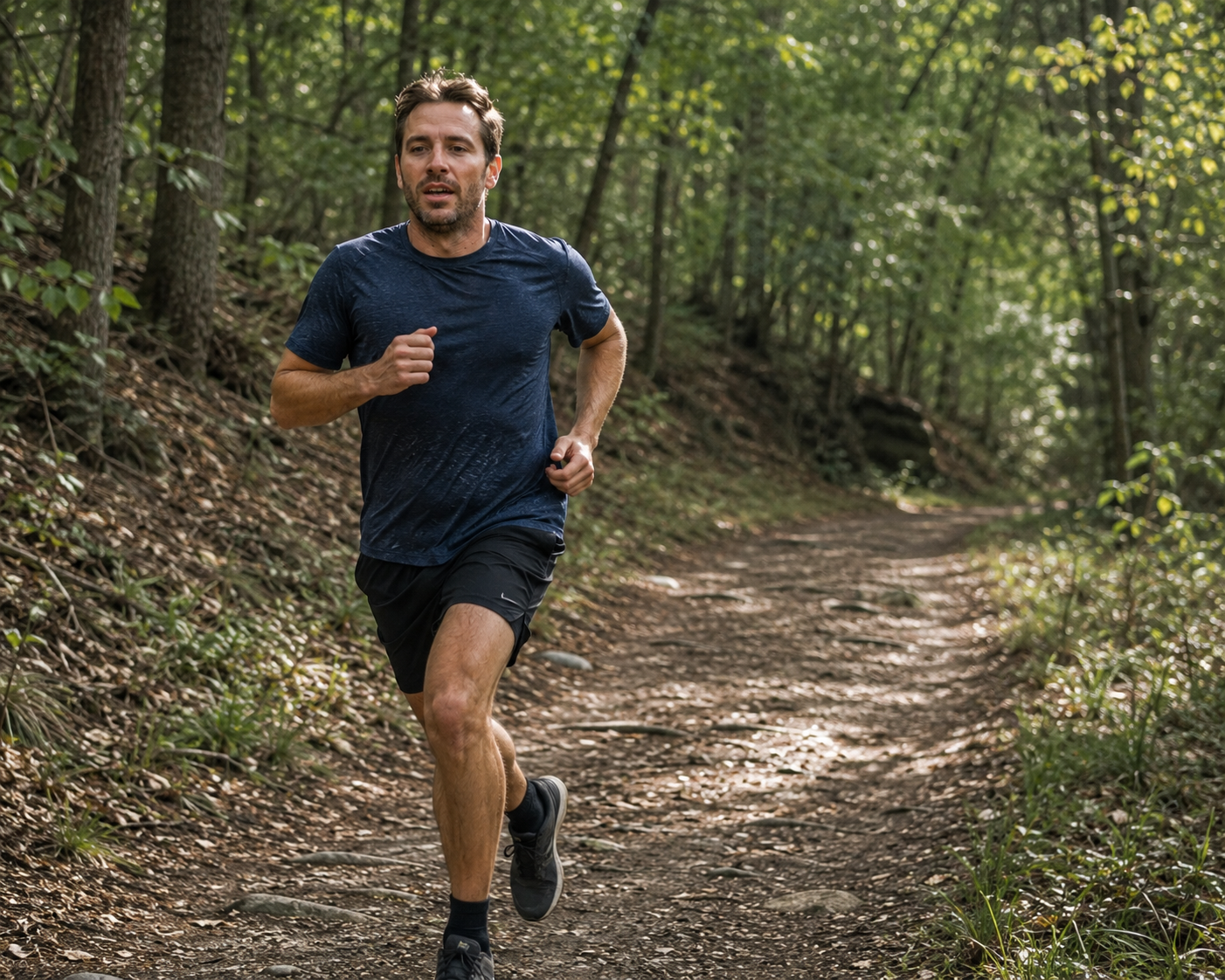
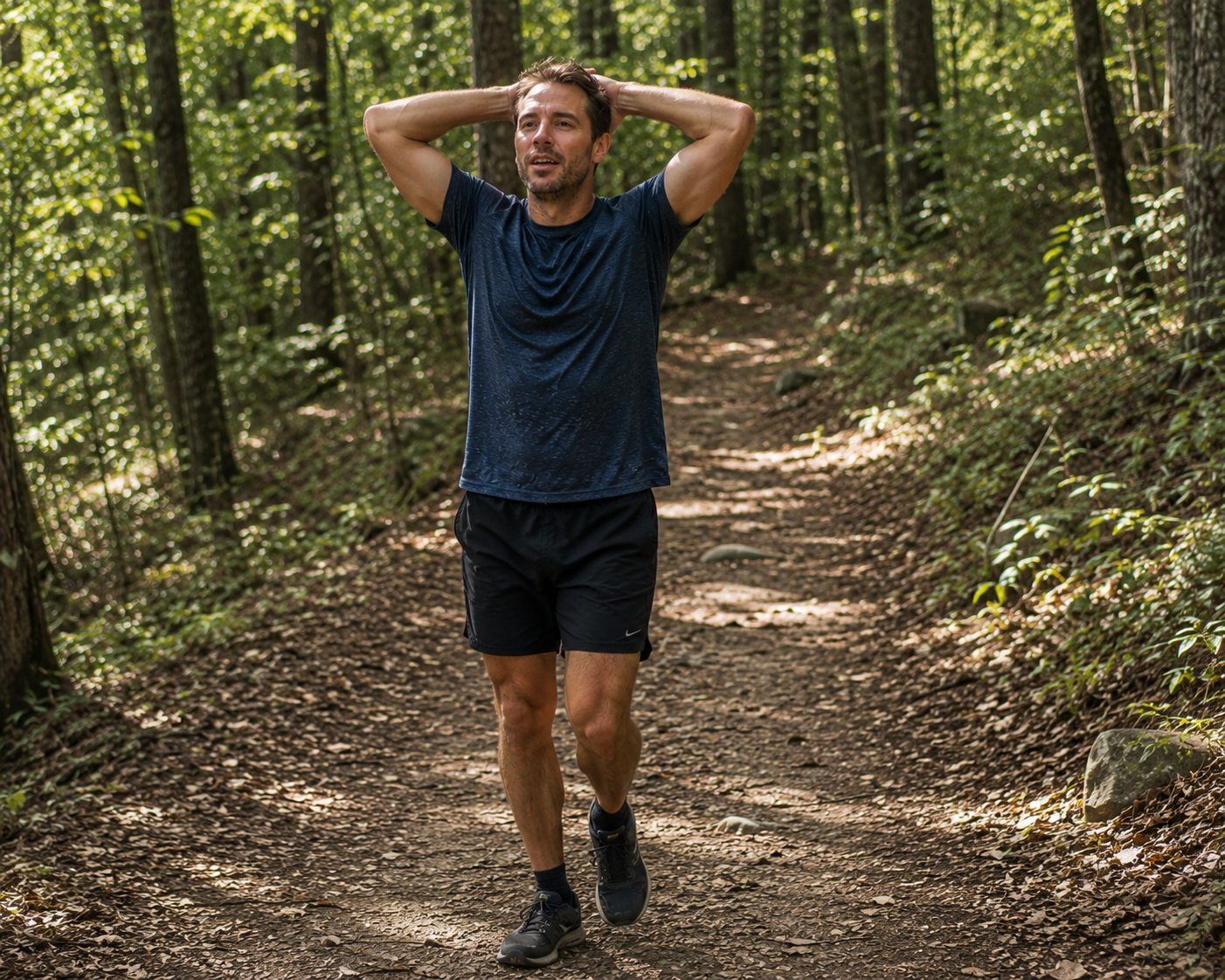
Instead of separating fitness and recovery, they can be combined.
Examples of integrated sessions include:
- Trail running instead of treadmill work
- Hill sprints instead of flat intervals
- Loaded carries using natural objects
- Climbing, crawling, and navigating terrain
This approach introduces variability, sensory engagement, and natural movement patterns.
It’s not just training—it’s adaptive movement in a dynamic environment.
A Simple Way to Apply This Immediately
You don’t need to overhaul your program.
Start with small integrations:
- Replace one weekly workout with outdoor movement
- Add a 15–20 minute walk after training
- Use parks or trails for warm-ups or recovery sessions
The goal isn’t complexity.
It’s exposure.
The Deeper Biological Reality
Humans evolved in natural environments for hundreds of thousands of years.
Structured gyms, cities, and artificial environments are recent.
Your physiology still expects uneven terrain, variable movement, and natural sensory input.
When you reintroduce those elements, the body responds quickly.
Stress decreases. Recovery improves. Focus sharpens.
Not because it’s new—but because it’s familiar at a biological level.

The Takeaway
Fitness isn’t just about how hard you train.
It’s about how well your body adapts.
And adaptation is influenced by more than sets and reps.
Sometimes, the highest-leverage change isn’t doing more.
It’s changing the environment you do it in.
Ideally daily, but even a few sessions per week can produce meaningful benefits.
FAQs
Is forest bathing the same as exercise?
No. It’s low-intensity exposure, but it complements training by improving recovery and reducing stress.
Can outdoor training replace gym workouts?
It depends on your goals, but it can effectively supplement most programs.
How often should I train outside?
Even 1–2 sessions per week can provide meaningful benefits.
Is this backed by real research?
Yes—multiple peer-reviewed studies support the physiological and psychological effects of nature exposure.