Why Obstacle Course Training Builds Real-World Fitness Better Than Machines
Modern gyms are full of machines designed to isolate muscles.
Leg press. Chest press. Cable rows.
And while those tools can absolutely build strength, they often miss something important:
Real life doesn’t happen in fixed movement patterns.
The body was designed to move dynamically—to climb, balance, crawl, stabilize, react, and adapt. That’s exactly why obstacle course training has exploded in popularity over the last decade.
It trains the body the way the body naturally wants to move.
Machines Train Muscles. Obstacles Train Systems.
Most machine-based exercises remove instability.
That makes them:
- safer for beginners
- easier to standardize
- simpler to progressively overload
But obstacle course training introduces something machines can’t fully replicate:
Coordination.
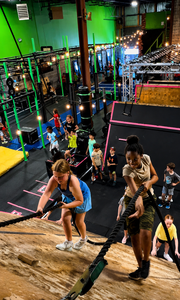
When you climb over a wall, swing across monkey bars, or balance through uneven terrain, your body isn’t just producing force—it’s solving movement problems in real time.
You’re training:
- grip strength
- balance
- mobility
- core stability
- reaction speed
- spatial awareness
At the same time.
That’s what makes OCR training feel different.
It’s not just exercise.
It’s movement with purpose.
Functional Fitness That Transfers to Real Life
One of the biggest problems in modern fitness is that people can become “gym strong” without becoming truly capable.
Someone may:
- squat heavy
- bench impressive numbers
- use machines regularly
…but still struggle with:
- climbing
- carrying awkward loads
- coordination
- endurance under fatigue
Obstacle course training bridges that gap.
It teaches the body to generate strength in unpredictable environments.
That’s closer to:
- sports
- recreation
- outdoor activity
- real-world movement demands
And because of that, it often feels more engaging and rewarding than repetitive machine circuits.
OCR Training Builds Mental Fitness Too
Obstacle training challenges more than muscles.
Every obstacle creates a small problem to solve:
- Where do I place my feet?
- How do I conserve energy?
- What grip works best here?
- How do I stay calm under fatigue?
That constant decision-making trains:
- confidence
- adaptability
- resilience
You don’t just become fitter.
You become more capable.
And that psychological carryover matters.
Many people discover that obstacle training improves how they approach:
- stress
- discomfort
- setbacks
- uncertainty
Because the workout itself becomes practice for overcoming challenges.
Why Kids and Adults Both Gravitate Toward OCR
Obstacle course training taps into something deeply natural.
Humans evolved:
- climbing
- jumping
- balancing
- navigating terrain
Not sitting still.
That’s why kids instinctively love obstacle courses. They feel like play.
And for adults, OCR training often reconnects them with movement in a way traditional fitness never did.
It feels less like punishment.
More like exploration.
The Takeaway
Fitness doesn’t need to be complicated to be effective.
But it should prepare you for more than a controlled environment.
Obstacle course training develops:
- strength
- endurance
- coordination
- problem-solving
- resilience
All at once.
Not because it isolates the body.
But because it challenges the body to work as a complete system